


16 Mar 2026 Why Your First Cleaning Costs More
Table of Contents
- The first cleaning is different from recurring service
- The first cleaning takes more time
- Recurring cleaning is maintenance
- Every home is different
- Why the first cleaning matters
- Why pricing should be explained clearly
- Is the first cleaning worth it?
- Final thoughts
The First Cleaning Creates the Foundation for Recurring Service
When someone asks why the first cleaning costs more before starting recurring service, I get it.
It can feel a little unfair at first. You’re thinking, “Wait, isn’t this the same house? Same kitchen? Same bathrooms? Why is the first visit more expensive than the cleanings that come after it?”
Fair question.
Here’s the answer: the first cleaning costs more because it is a different type of cleaning.
It’s the cleaning before the cleanings.
It’s the reset. The catch-up. The part where we deal with the things that have been quietly building up while life has been doing what life does best: making a mess and pretending it had nothing to do with it.
After that, weekly, biweekly, or monthly service is about keeping your home at that higher standard, so every visit doesn’t have to start from scratch.
That’s why the first cleaning before recurring service costs more.
The first cleaning is different from recurring service
When a home is already being cleaned regularly, there is less buildup to work through during each visit.
But before recurring service begins, there is usually a backlog of detail work that needs attention first.
Even very tidy homes collect:
- Dust
- Soap scum
- Kitchen grease
- Hard water buildup
- Fingerprints on surfaces
- Dirt along edges and baseboards
- Buildup in bathrooms and kitchens
That first visit is about bringing the home to a maintainable starting point.
Once that baseline is established, recurring visits become much more efficient.
The first cleaning takes more time
A first cleaning usually requires more labor and more detail work than future visits.
That may include:
- Detailed bathroom cleaning
- Extra attention to kitchen surfaces
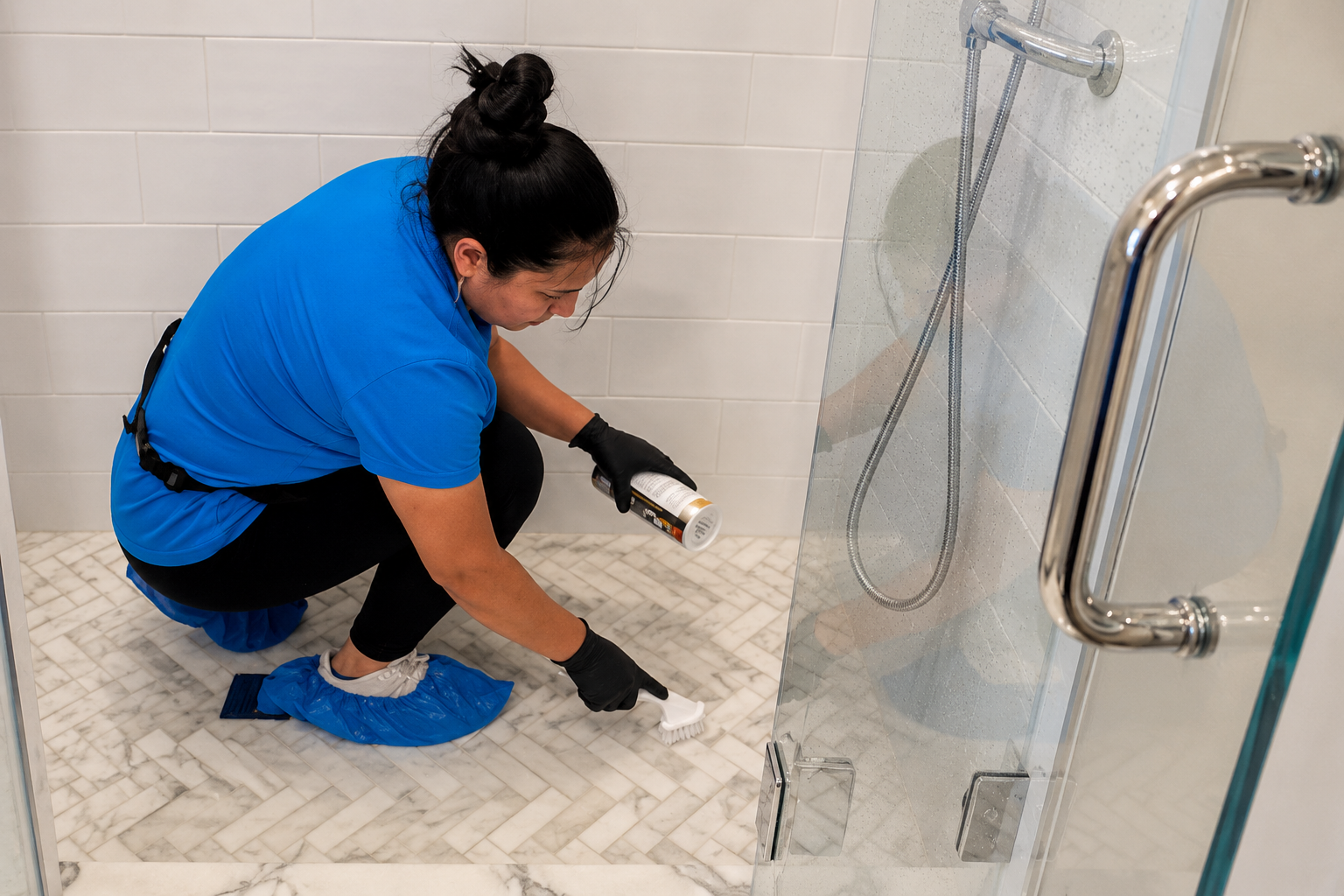
- Removing buildup from sinks, tubs, showers, and fixtures
- Detailed dusting
- Cleaning edges, corners, and overlooked areas
- Bringing surfaces back to a maintainable condition
In many homes, the first visit is the difference between cleaning and catching up.
And honestly, life happens.
People work long hours. Kids explode through the house like tiny confetti cannons. Pets shed. Laundry multiplies overnight. Suddenly it’s been longer than anyone realized since the bathrooms got the kind of attention they deserve.
That’s normal.
The first cleaning helps reset the home so recurring service can actually maintain it properly moving forward.
Recurring cleaning is maintenance
Once the home has been reset, future cleanings are different.
The team is no longer starting from zero. They are maintaining the work already done.
That means:
- Bathrooms stay easier to clean
- Dust has less time to build up
- Floors are easier to maintain
- Kitchens stay more manageable
- The home consistently feels cleaner overall
This is why recurring cleaning usually costs less than the first visit.
It is not because less care goes into the service. It is because regular maintenance prevents the home from needing the same level of catch-up every time.
Think of it like maintaining a garden. Keeping it healthy is much easier than trying to rescue it after an entire season of weeds.
Every home is different
The cost of a first cleaning is not just about square footage.
Two homes can be the same size and require very different amounts of time depending on:
- Pets
- Children
- Number of bathrooms
- Cooking habits
- Hard water
- Clutter level
- Work-from-home lifestyles
- How long it has been since the last professional cleaning
And just to be clear, this is not about judgment.
Homes are meant to be lived in.
People get busy. Families happen. Work happens. Life happens.
Our job is not to judge the mess.
Our job is to help make the home easier to live in.
Why the first cleaning matters
The first cleaning sets the foundation for recurring service.
Without that reset, recurring visits can turn into a cycle of trying to catch up over and over again. That is frustrating for everyone.
A thorough first cleaning helps create:
- A healthier environment
- Easier ongoing upkeep
- More consistency
- Better long-term results
- Less stress for the homeowner
Once that baseline is established, maintaining the home becomes much easier.
That is the real purpose of the first cleaning.
Why pricing should be explained clearly
Cleaning pricing can feel confusing, and honestly, the industry has not always done a great job explaining it.
Some companies give vague pricing. Others avoid explaining why the first visit costs more.
We think customers deserve a clear answer. We even have a pricing calculator that can show it to you right on our website.
The first cleaning before recurring service costs more because it takes more time, more detail work, and more labor to reset the home before maintenance cleaning can begin.
That’s really it.
No mysterious cleaning math. No secret mop-based conspiracy.
Just more work during the first visit.
Is the first cleaning worth it?
The first cleaning is often the visit where customers feel the biggest difference emotionally.
Not just because the home looks cleaner, but because it feels calmer.
The bathrooms feel fresh. The kitchen feels manageable again. The dust is not quietly plotting its return from every surface.
A clean home does not solve every problem in life.
But it can make everyday life feel easier, lighter, and more under control.
And that matters more than people sometimes realize.
Final thoughts
If you are comparing cleaning services, do not just compare prices. Ask what is included. Ask how the company handles the first visit before recurring service begins. Ask whether the company explains its process clearly.
A professional cleaning company should be transparent about pricing.
The first cleaning before recurring service costs more because it does more. It creates the starting point for easier, healthier, and more consistent maintenance moving forward.
FAQs
Why does the first cleaning cost more?
The first cleaning costs more because it involves extra detail work, buildup removal, and resetting the home before recurring cleaning service begins.
Is the first cleaning more expensive than recurring cleaning service?
Yes. The first cleaning is usually more expensive than recurring cleaning service because the initial visit takes more time and labor to bring the home to a maintainable level.
Why does the first cleaning take longer?
The first cleaning takes longer because professional cleaners often need to address dust buildup, soap scum, kitchen grease, and areas that have not been professionally cleaned on a regular schedule.
Does every home need a first cleaning before recurring service?
Most homes benefit from a first cleaning before recurring service starts because it creates a clean baseline that makes future weekly, biweekly, or monthly visits more effective.