


07 May 2026 How to Clean and Disinfect a Cutting Board (Safely and Properly)
You finish prepping dinner, rinse the cutting board, and set it in the sink.
It looks clean. No visible residue. Maybe a faint smell of garlic, but nothing dramatic.
And yet … this is one of those places where “looks clean” and “is clean” aren’t always the same thing.
If you want to clean and disinfect a cutting board properly, it helps to understand what actually needs to happen, and when.
Cleaning vs disinfecting (they’re not the same)
Cleaning removes what you can see. Food particles, grease, residue from whatever you just prepared.
Disinfecting goes further. It reduces bacteria you can’t see, especially after raw meat, poultry, or fish.
You usually need both. Just not always at the same time.
How to clean a cutting board
For everyday use, cleaning is straightforward.
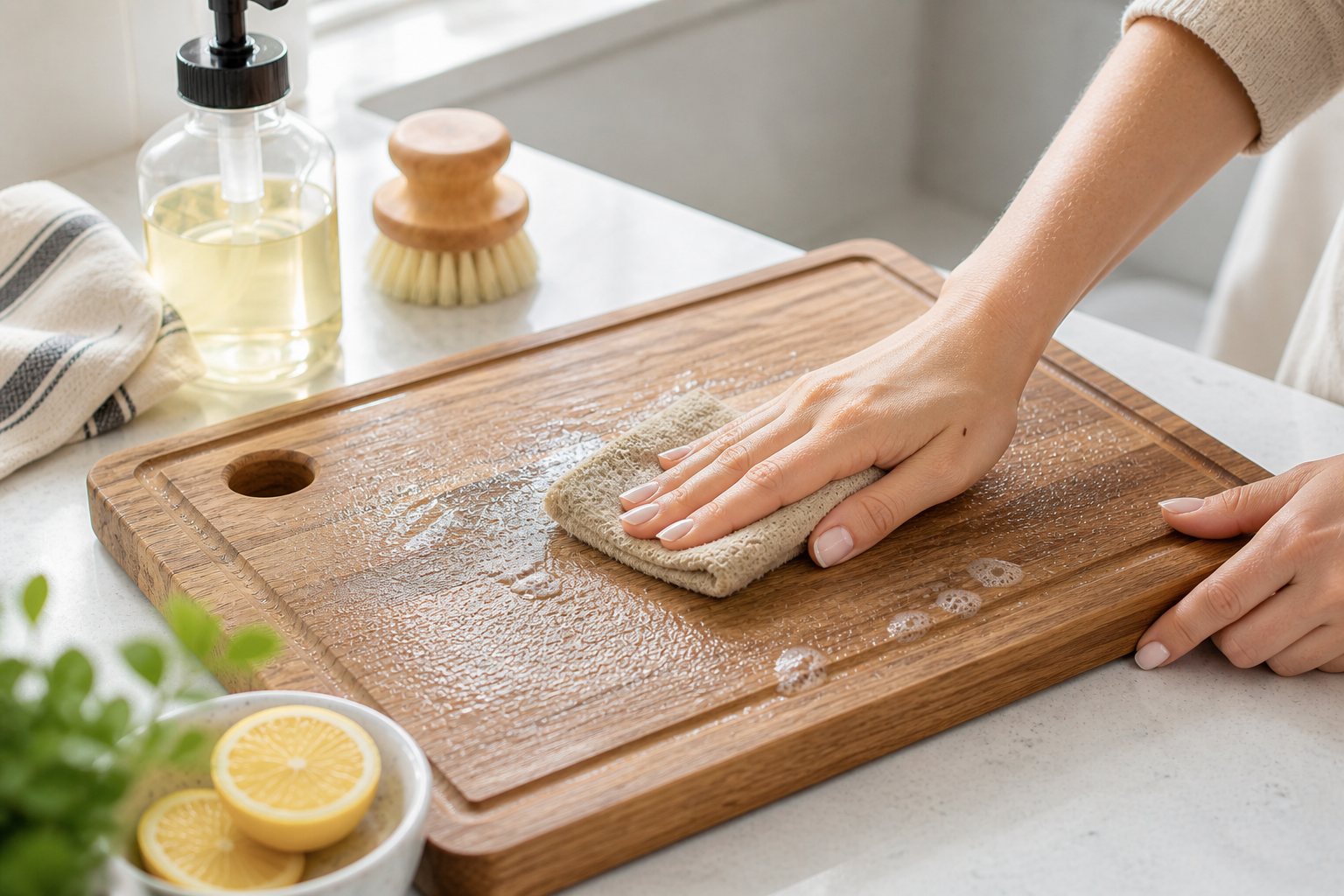
Use warm water, dish soap, and a good scrub brush or sponge. Cover the full surface, not just the center. Rinse thoroughly, then dry the board instead of leaving it wet in the sink.
That last step matters more than people think. Moisture is what allows bacteria and odors to linger.
For most meals, this level of cleaning is enough.
How to disinfect a cutting board safely
Disinfecting matters most after raw meat, poultry, or anything that can carry harmful bacteria.
Start by washing the board with hot, soapy water. Rinse it well.
Then apply 3% hydrogen peroxide to the surface. Let it sit for a few minutes, rinse again, and dry the board completely.
Hydrogen peroxide works on a surface that is already clean. It is not a shortcut. It is the second step.
Wood vs plastic cutting boards
Not all cutting boards should be treated the same way.
Wood boards are more sensitive to moisture. Avoid soaking them or putting them in the dishwasher. Clean them promptly, dry them well, and oil them occasionally to keep the surface in good condition.
Plastic boards are more durable. Many can go in the dishwasher, which helps with higher-temperature cleaning. They’re often a practical choice for raw meat because they’re easier to sanitize thoroughly.
Each has its place. The key is using the right approach for the material.
What about vinegar? Or lemon and salt?
Vinegar, lemon, and salt all have a place in cleaning a cutting board. They can help with odor, light residue, and everyday freshening, especially after cutting fruits or vegetables.
But they’re not the same as disinfecting.
Vinegar can reduce some bacteria, but it isn’t reliable enough to use as the only step after raw meat, poultry, or fish. Lemon has mild antibacterial properties and is helpful for smells, but it also isn’t a dependable disinfectant for foodborne bacteria. Salt adds scrubbing power, but it doesn’t sanitize the board.
That doesn’t mean these methods are useless. It just means they need to be used for the right job. For garlic smell, onion odor, or a quick refresh, lemon and salt can be helpful. For raw chicken, you need something more reliable.
If you’re thinking more broadly about what you’re using in your home, it’s worth understanding how safe your cleaning products really are.
When it’s time to replace a cutting board
Even with good care, cutting boards don’t last forever.
Deep grooves, cracks, and lingering odors are signs that it may be time to replace it. Those small cuts can trap bacteria in ways that are difficult to clean or disinfect fully.
If a board no longer feels easy to clean, it probably isn’t.
FAQs about how to clean and disinfect a cutting board
FAQs about how to clean and disinfect a cutting board
Clean with warm water and dish soap after each use. Disinfect with hydrogen peroxide when needed, especially after raw meat or poultry.
Can you disinfect a cutting board without bleach?
Yes. Hydrogen peroxide is an effective option when used after proper cleaning. Vinegar can help clean but is not reliable for full disinfection.
How often should you disinfect a cutting board?
Disinfect after preparing raw meat, poultry, or fish. For everyday use with fruits and vegetables, thorough cleaning is usually enough.
The bottom line
To clean and disinfect a cutting board, you don’t need complicated routines or harsh chemicals.
You need to clean thoroughly, disinfect when it matters, and pay attention to moisture and wear over time.
Most of the time, it’s not about doing more. It’s about doing the right things, consistently.