


22 Jan 2026 The Most Time-Consuming Rooms to Clean (And Why They Matter for Pricing)
Not all rooms take the same amount of time to clean — and that’s exactly why cleaning prices aren’t based on square footage alone.
A kitchen can be smaller than a bedroom and still take twice as long, because it’s packed with grease, appliances, and high-touch surfaces. A bathroom can look “fine” and still require a full sequence of disinfecting steps.
Once you understand which rooms take the most time — and what actually happens in them — professional cleaning pricing starts to make a lot more sense. It’s not arbitrary. It reflects labor, detail, and the real work required to clean a home properly.
TL;DR
Kitchens and bathrooms are the most time-consuming rooms to clean because they require more detail, sanitation, and specialized steps. Pricing reflects the time, effort, and systems required — not just the size of your home.
Why Cleaning Time Isn’t About Square Footage Alone
When people think about cleaning time, they often think in terms of:
- number of rooms
- square footage
- how “big” the house feels
But professional cleaning time is driven more by:
- surface type
- soil level (grease, soap scum, residue)
- number of fixtures and appliances
- required sanitation steps
- detail work
That’s why two homes of the same size can take very different amounts of time to clean.
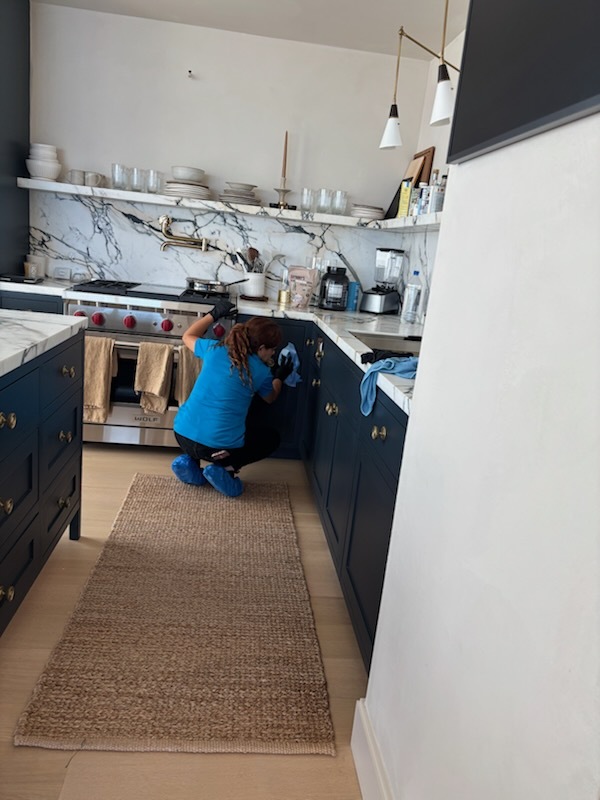
1. Kitchens: Small Room, Big Job
Kitchens are almost always the most time-consuming room to clean.
Why? Because they combine:
- grease
- food residue
- high-touch surfaces
- appliances
- multiple materials (steel, glass, stone, wood)
A thorough kitchen clean includes:
- degreasing stovetops and backsplashes
- cleaning appliance exteriors
- wiping cabinet fronts and handles
- sanitizing counters and sinks
- detail work around edges, knobs, and crevices
Even a “tidy” kitchen requires careful, methodical work. That’s why kitchens weigh heavily in pricing — they’re detail-dense and labor-intensive.
2. Bathrooms: Where Sanitation Matters Most
Bathrooms aren’t just about looking clean — they’re about being clean.
They require:
- disinfecting (not just wiping)
- dwell time for products to work
- multiple tools and cloths to prevent cross-contamination
- careful attention to fixtures, grout, and tight spaces
Tasks like:
- scrubbing showers and tubs
- cleaning toilets properly
- polishing mirrors and chrome
- addressing soap scum and mineral buildup
All take time — and precision.
That sanitation factor is why bathrooms are consistently one of the most time-consuming rooms to clean and a major factor in pricing.
3. Floors: The Hidden Time Multiplier
Floors don’t just take time — they multiply it. Every room adds edges, furniture to work around, and more surface area that needs careful passes.
Cleaning floors depends on:
- square footage
- furniture placement
- surface type (hardwood, tile, carpet)
- edging and detail work
Vacuuming, mopping, and edge cleaning add up quickly, especially in open layouts or homes with lots of furniture. Floors may not feel complicated, but they’re physically demanding and time-intensive.
4. Bedrooms & Living Areas: Faster — But Not “Easy”
Bedrooms and living rooms are usually quicker than kitchens and bathrooms, but they’re not effortless.
Time varies based on:
- how much needs to be picked up or moved
- furniture layout and access (especially under beds)
- decorative items and shelving
- pet hair and dust buildup
- bed setup and linen changes (this is a big one)
A minimalist bedroom cleans quickly. A lived-in family room with books, toys, and electronics takes more care and time.
And in bedrooms, it’s often the beds that change the timing. Linen changes, multiple beds, bunk beds, or beds with lots of layers (duvets, covers, throws, decorative pillows) can add meaningful time—even if the room itself isn’t large.
These spaces benefit greatly from consistency. Regular cleanings keep timing predictable and help prevent the “deep-clean creep” that makes any room take longer than expected.
5. Add-Ons That Change Timing
Certain tasks aren’t included in standard cleaning for one reason: they change the time equation significantly.
Examples:
- inside ovens
- inside refrigerators
- interior cabinets
- baseboards
- interior windows
These aren’t small extras — they’re deep, focused tasks that require additional time, tools, and effort. That’s why they’re priced separately.
Why This All Matters for Pricing
Professional cleaning pricing reflects:
- how long the job actually takes
- how many people are needed
- the level of detail required
- consistency from visit to visit
It’s not about charging more because a room is “important.”
It’s about being realistic about labor.
When pricing aligns with the real work involved, it allows cleaning teams to work thoroughly, safely, and consistently — without rushing or cutting corners.
The Bottom Line
The most time-consuming rooms to clean aren’t always the biggest ones. Kitchens and bathrooms take longer because they demand more detail, sanitation, and precision.
Understanding that helps pricing make sense — and helps set realistic expectations for professional cleaning.
A good cleaning isn’t just about how long it takes. It’s about why it takes that long — and doing it right.
FAQs
Q: Why do kitchens and bathrooms cost more to clean?
A: They require more steps, more detail, and more sanitation than other rooms. That extra labor is what affects timing and pricing.
Q: Does clutter affect cleaning time?
A: Yes. More items mean more careful cleaning, more repositioning, and more detail work.
Q: Why are add-ons priced separately?
A: Tasks like ovens, fridges, handwiping baseboards, and linen changes significantly increase cleaning time and require focused effort beyond a standard clean.
Q: Does regular cleaning reduce the time (and cost) over time?
A: Often, yes. Consistent upkeep prevents buildup, making future cleanings more efficient and predictable.