

07 Jan 2026 How Safe Are Your Cleaning Products? Understanding What You’re Breathing, Touching, and Inhaling
It’s a fair question — and one more people are starting to ask: how safe are your cleaning products, really?
Most of us don’t think much about what we’re breathing, touching, or inhaling while cleaning. Products are marketed as “fresh,” “powerful,” or “disinfecting,” and it’s easy to assume that if something is sold for home use, it must be safe.
Still, safety isn’t always that simple — especially when cleaning products are used regularly, in enclosed spaces, and around the people and pets who live in the home. Asking how safe your cleaning products are is really about understanding what lingers in the air and on surfaces after the cleaning is done.
TL;DR
Many traditional cleaning products leave behind chemical residues and airborne compounds that affect indoor air quality. Safer cleaning focuses on reducing what you breathe, touch, and inhale — without sacrificing effectiveness.
What Cleaning Products Leave Behind (and How Safe Your Cleaning Products Really Are)
When a cleaning product is sprayed, it doesn’t just land on a surface.
Tiny particles become airborne. Residues remain after wiping. Fragrances linger long after the job is done. Over time, those exposures add up — particularly in homes that are cleaned regularly.
This matters because:
- indoor air is often more polluted than outdoor air
- cleaning usually happens in closed environments
- residues sit on surfaces people touch every day
Even widely used, well-intentioned products can contribute to poor indoor air quality when used repeatedly.
Fragrance Isn’t the Same as Clean
That “clean smell” many people associate with cleaning usually comes from added fragrance — not from cleanliness itself.
Fragrance blends can contain dozens of undisclosed ingredients. For many people, those scents trigger:
- headaches
- respiratory irritation
- skin sensitivity
- nausea or discomfort
For example, some people notice irritation or headaches long before they ever connect those symptoms to cleaning products.
A space doesn’t need to smell strong to be clean. In fact, truly clean often smells like … nothing at all.
Why Repeated Exposure Matters
Using a product once may not feel significant. But cleaning is repetitive.
Daily wiping, weekly cleanings, and long-term use mean:
- repeated skin contact
- repeated inhalation
- repeated surface exposure
For children, pets, older adults, and people with sensitivities, those repeated exposures can have a bigger impact than people expect.
What “Safer” Cleaning Really Means
Safer cleaning isn’t about avoiding disinfecting when it matters. It’s about reducing unnecessary chemical exposure while still cleaning effectively.
A safer approach focuses on:
- fewer ingredients
- no added fragrances
- minimal residue
- effectiveness without harsh chemicals
That’s where alternative cleaning systems come in.
How PUREcleaning® Works
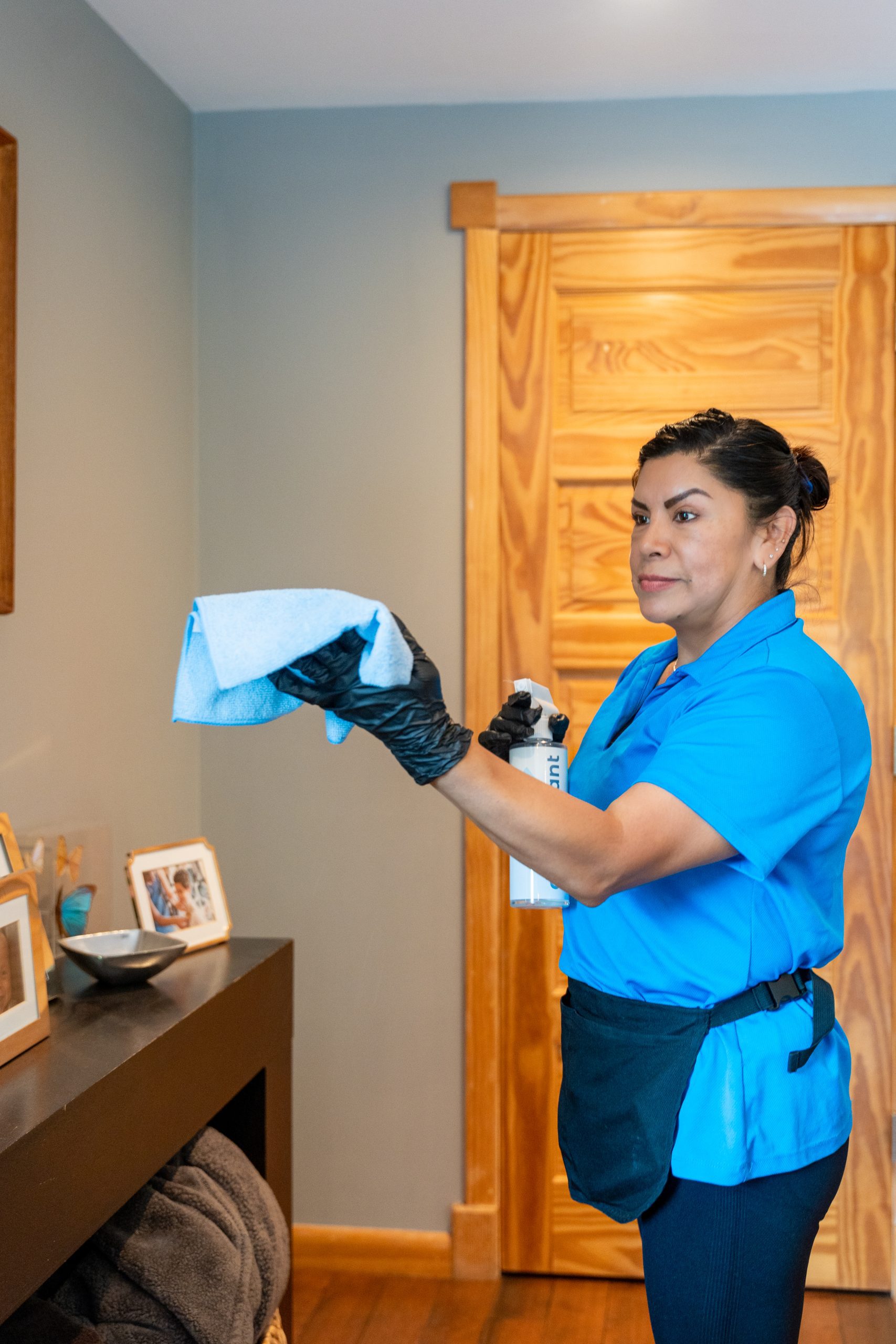
PUREcleaning® uses electrolyzed water — created by passing an electrical current through water and salt — to produce a powerful, hospital-grade disinfectant.
It:
- cleans and disinfects effectively
- breaks down into ordinary water after use
- leaves no chemical residue behind
- contains no added fragrances
- is safer for people, pets, and surfaces
Because it doesn’t rely on traditional chemicals, there’s far less left behind to breathe in or absorb through the skin.
Why This Matters in Real Homes
Cleaning isn’t a one-time event — it’s ongoing.
Using safer products consistently means better indoor air quality, fewer lingering residues, and less irritation for sensitive individuals.
Over time, those benefits add up — not just in how your home looks, but in how it feels to live in.
Whether you clean your home yourself or have help, what you use matters. Safer products reduce unnecessary exposure and create a healthier space for everyone who lives — and works — there.
Does Safer Mean Less Effective?
This is one of the most common concerns — and it’s a fair one.
Safer doesn’t mean weaker. PUREcleaning® is effective against bacteria, viruses, and everyday grime without relying on harsh chemicals. The difference is how the cleaning is achieved, not whether it works.
Clean doesn’t have to come with a chemical cloud.
The Bottom Line
Understanding how safe your cleaning products are means looking beyond labels and scents and thinking about long-term exposure.
What you breathe, touch, and inhale matters — especially in a space meant to support health and well-being.
Using safer cleaning systems like PUREcleaning® reduces unnecessary chemical exposure while still delivering a thorough, effective clean. Over time, that can make a meaningful difference in how your home feels and functions.