


16 Jan 2026 Does a Clean Home Really Help You Sleep Better? Science Says Yes.
If you’ve ever fallen into bed and thought, “I’ll sleep better once I get this place under control,” you’re not imagining things.
A clean home can actually help you sleep better — and the connection has less to do with aesthetics and more to do with what your body and brain need in order to rest.
Because sleep isn’t just about being tired. It’s about feeling safe, comfortable, and calm. And the environment you fall asleep in plays a bigger role than most people realize.
TL;DR
A clean home can help you sleep better by reducing allergens (like dust and pet dander), improving indoor air quality, lowering stress, and making your bedroom feel calmer and more restful. It’s not about perfection — it’s about creating a space that supports your nervous system and your breathing.
Dust and Allergens Don’t Just Make You Sneeze — They Can Disrupt Sleep
Dust mites, pet dander, and pollen often build up in bedrooms because fabrics hold onto particles: bedding, rugs, curtains, upholstered furniture.
And allergies don’t just cause sniffles — they can interfere with breathing, increase congestion at night, and lead to restless, low-quality sleep.
Research shows allergic rhinitis is a risk factor for poor sleep quality, especially when symptoms worsen at night.
And many allergy and medical resources recommend specific bedroom cleaning steps — like weekly hot-water washing — specifically to improve nighttime symptoms.
What helps most:
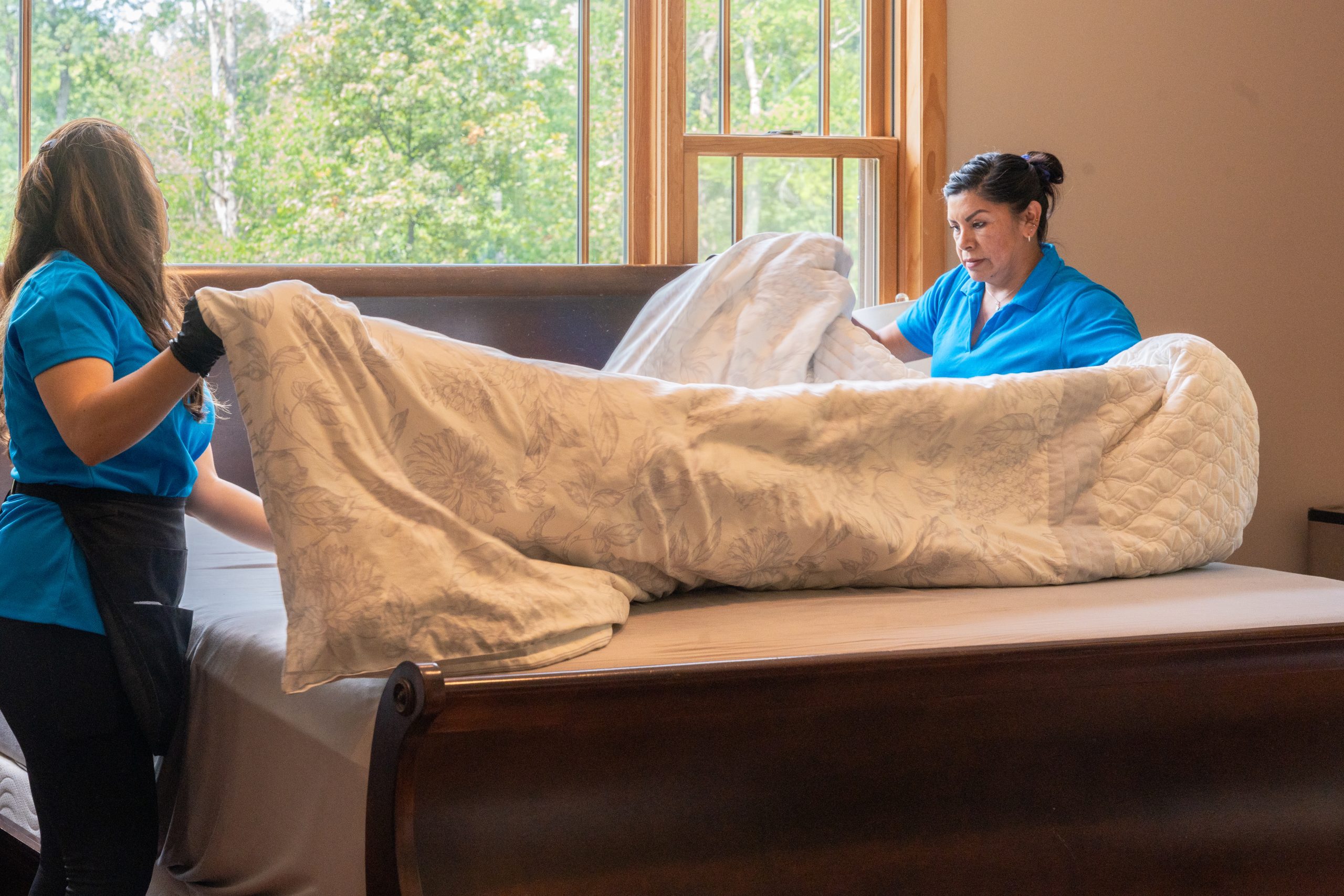
- Wash sheets weekly (hot water if allergens are an issue)
- Vacuum with a HEPA filter
- Dust with microfiber (instead of pushing dust into the air)
- Keep pets out of the bedroom when possible
Indoor Air Quality Matters More Than We Think
Most people focus on outdoor pollution… but indoor air can be worse — especially in bedrooms with windows closed and air circulating poorly.
When you clean regularly (especially with low-residue products), you reduce:
- dust buildup
- pet dander
- mold spores
- and lingering residues that can become airborne again
And breathing well is one of the fastest ways to signal to your body that it’s safe to downshift.
Clutter and Visual “Noise” Keep Your Brain On
Even if you’re not consciously thinking about the laundry pile or the cluttered nightstand, your brain is.
Mess sends a subtle message: unfinished, unresolved, not done.
That background mental noise can raise stress and make it harder to relax — especially at night when your mind finally has quiet time to notice everything you’ve been ignoring.
A tidy bedroom isn’t “nice.” It’s a cue to your nervous system that the day is over.
Clean Feels Like Closure — and That Helps You Wind Down
Sleep works best when your body can shift out of “day mode.”
A clean home creates:
- fewer sensory distractions
- fewer tasks pulling at your attention
- fewer signals that you should still be doing something
It’s the same reason people sleep better in a well-made hotel bed. The space feels finished. Your brain stops scanning.
People With Sensitivities Often Feel the Difference Immediately
For kids, older adults, and anyone with asthma, allergies, migraines, or chemical sensitivities, the sleep-cleaning connection tends to show up fast.
That’s because a cleaner environment means:
- fewer irritants on surfaces
- fewer airborne triggers
- fewer strong fragrances that linger overnight
A clean home isn’t just “nice.” For some people, it changes how they breathe and how they rest.
It’s Not About Perfection — It’s About Creating a Sleep-Friendly Home
Here’s the part people miss:
You don’t need a spotless house to sleep better.
You need a bedroom that supports rest.
That usually means:
- clear floors (less dust + fewer distractions)
- clean bedding
- a wiped-down nightstand
- clean air
- a room that feels calm
Even small habits — done consistently — create a noticeable difference.
The Bottom Line
So … does a clean home help you sleep better?
Yes. And it makes sense when you think about it:
Better air. Fewer allergens. Less stress. A calmer environment. More comfort.
A clean bedroom doesn’t guarantee perfect sleep — but it stacks the odds in your favor.
And when your home supports your sleep, everything else gets easier too.
FAQs
Q: Do I need to clean right before bed to sleep better?
A: Not at all. The goal isn’t to do a last-minute cleaning sprint at night. What matters most is the overall environment you’re sleeping in — reduced dust, cleaner air, fresh bedding, and less clutter. Those benefits come from consistent upkeep over time, not from cleaning right before you turn off the lights.
Q: Can dust really affect sleep quality?
A: Absolutely. Dust mites, pet dander, and allergens can worsen nighttime congestion and disrupt breathing, which can lead to more restless sleep.
Q: How often should I wash sheets if I have allergies?
A: Many allergy resources recommend washing bedding weekly in hot water (around 130°F) to reduce dust mites and allergens. If symptoms are strong, washing pillowcases more often can help too.